

Freestyle + Fitness Director Keith Shipman on why the off-season doesn’t have to mean lost progress
Snow sports have a problem most other sports don’t: the season ends, but the competition doesn’t wait for it to start back up. Freestyle + Fitness Director Keith Shipman has a simple way of putting it: “The only way to get better at an activity is to do it more.” That’s the whole case for indoor training in one sentence. Here’s how it actually plays out.
More reps, more often
On the mountain, getting a rep in means a lift ride, a run down, a few minutes of the skill you’re trying to work on. Indoors, that ratio flips entirely. As Keith explains:
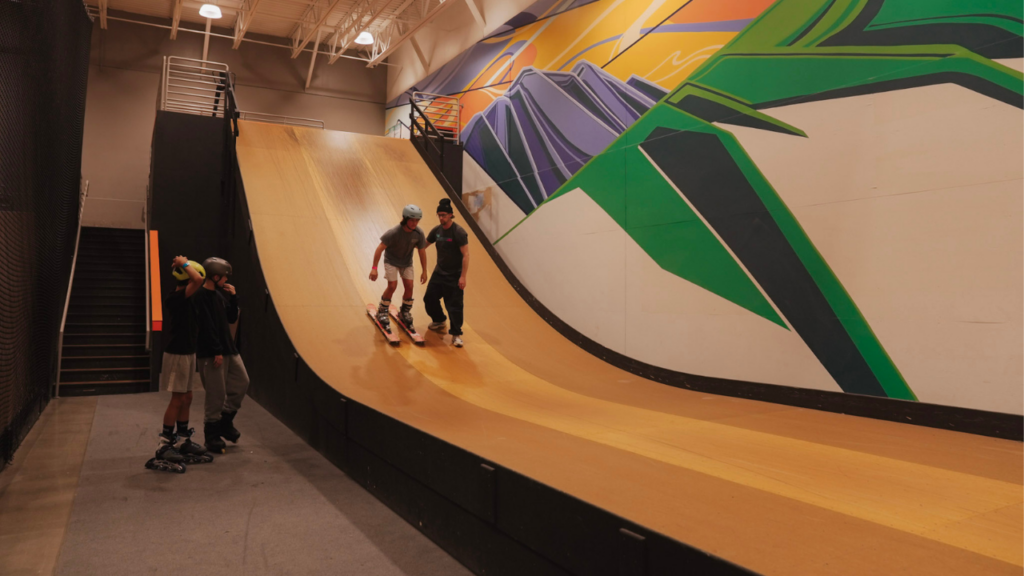
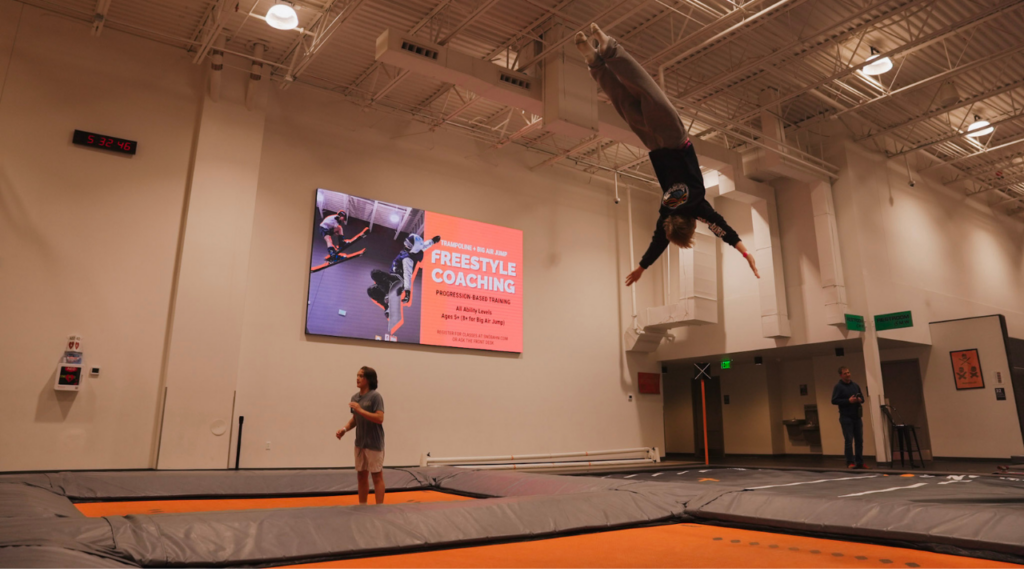
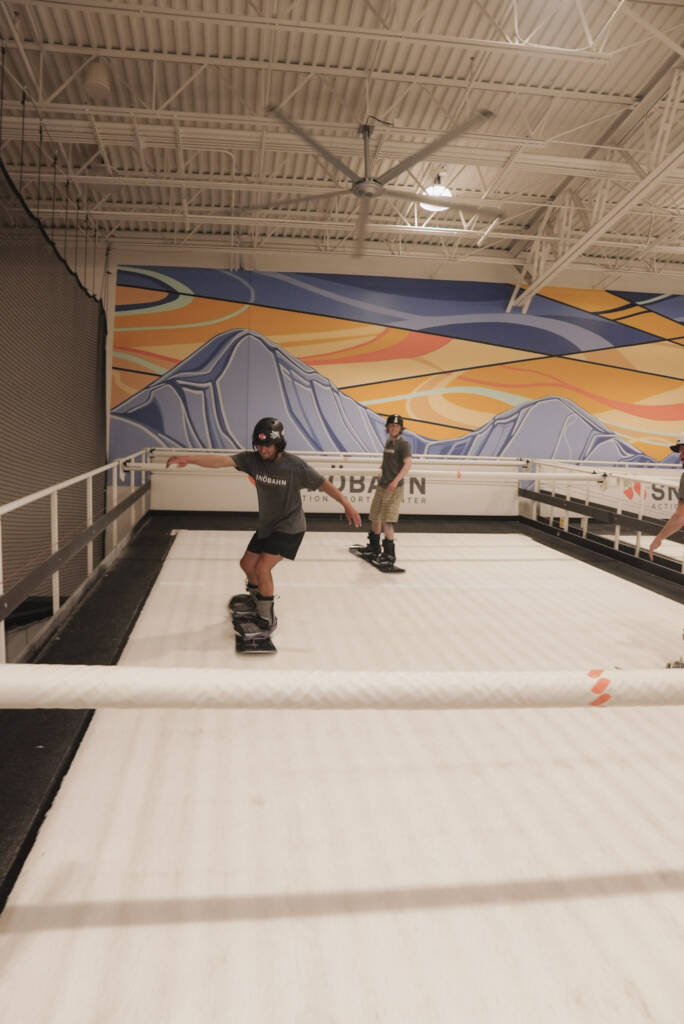
“For competitive athletes, getting more turns in on the revolving slope, getting more tricks done on the big air jump with skis or snowboard, and doing repetitions of their new tricks that they’re trying to build up for next season on the trampoline is a huge advantage.”
More attempts in less time means faster progression, not because indoor training replaces the mountain, but because it multiplies how many times you can work on the exact skill you’re trying to build.
The same conditions, every time
Anyone who’s trained outdoors knows the frustration: the course changes, the snow changes, the temperature changes, and half of every session gets spent just adjusting,
“In winter sports, it’s really hard to find the same course to train on, find the same conditions – every location you go to, the same temperature, the same snow quality. At SNÖBAHN, we have a controlled environment. You’re consistently walking into the same conditions and picking up right where you left off the day before.” (Freestyle + Fitness Director, Keith Shipman)
That consistency is what actually lets technique lock in. You’re not relearning how to adapt every session – you’re refining the same movement until it’s automatic.
Progress quicker, and safer
Indoor training isn’t simply about speed of progression – it’s about doing it in a way that protects athletes while they push their limits. Controlled conditions mean coaches can see exactly where an athlete is in a progression and build the next step deliberately, instead of hoping the mountain cooperates that day.
Bottom line
The mountain will always be the goal. But the work that gets you there doesn’t have to wait for snow. Consistent conditions, more reps, and a space built to keep you progressing every day, year-round — that’s the advantage indoor training gives competitive athletes over everyone still waiting for the next storm.