If you’ve never skied before, or if you’re signing your kid up for their first lesson, Level 1 is where every skier begins. And it’s more intentional than most people realize.
At SNÖBAHN, we use a 7-level progression system based on the standards of the Professional Ski Instructors of America (PSIA). Each level has specific, measurable skills.
So what happens at Level 1? Two things… and they’re the foundation of everything that comes after.
SKILL 1: Sliding in a balanced position on a moving slope
Before any turning or stopping, a skier needs to feel comfortable on the slope. That means finding a neutral, balanced stance, weight centered, knees soft, eyes up, and holding this position.
For most beginners, the instinct is to lean back (away from the hill), which puts you off balance immediately. Learning to trust the balanced position is a real skill, and it takes deliberate practice.
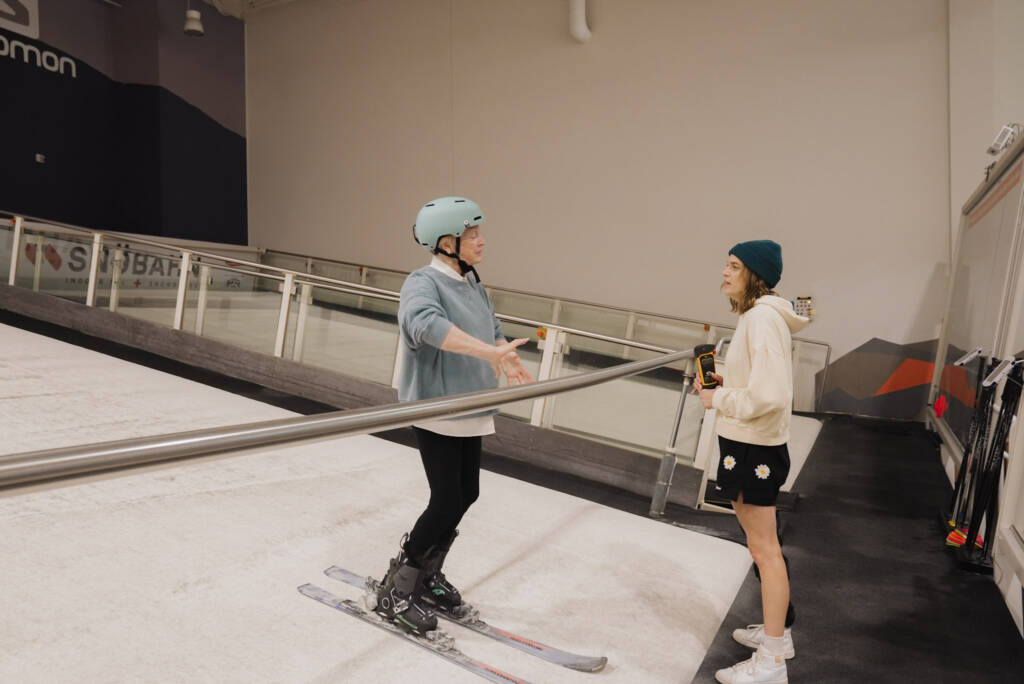
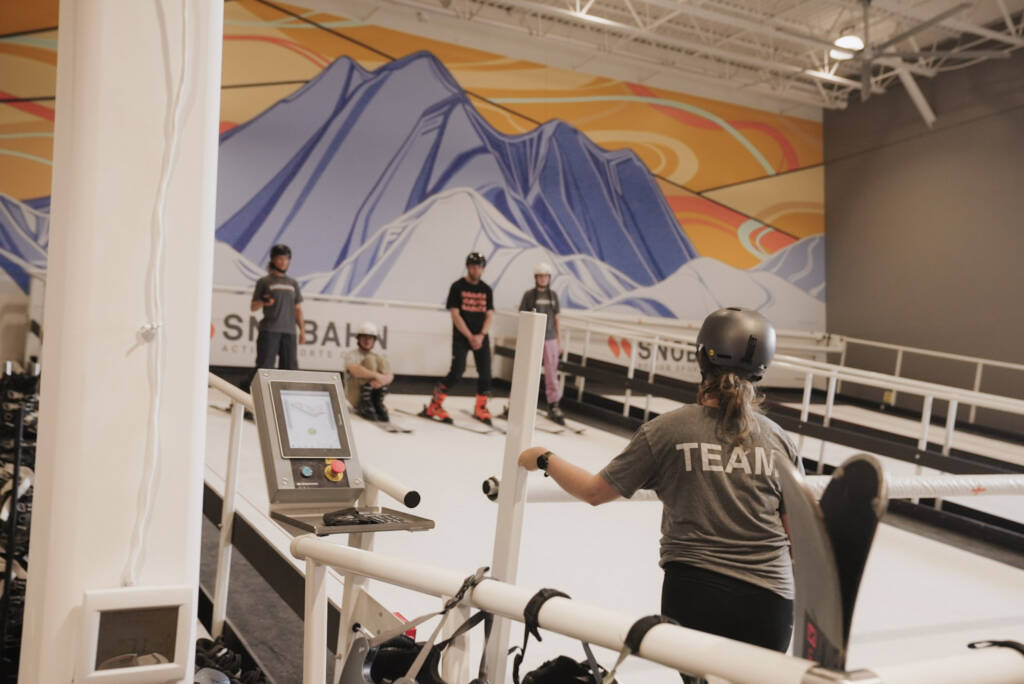
We work on this in a controlled environment using our revolving slopes at SNÖBAHN, which lets skiers focus purely on balance without the chaos of a full mountain.
SKILL 2: Gliding and stopping with a wedge
The wedge (sometimes called a “pizza”) is the foundational braking tool for skiers. By pushing the heels out and bringing the tips together, a skier creates friction against the snow and slows down. At Level 1, we’re working on making that wedge happen on demand. This is a big confidence milestone. When a skier (or a parent watching their kid) sees that they can actually stop, everything feels more manageable.
Why these two skills matter
Balance and braking are the two most fundamental movements in skiing. Every turn, every progression through the 7 levels, is built on top of them. Rushing past Level 1 without genuinely owning these skills creates problems later, especially when terrain gets steeper.
Skiers who “kind of” know how to wedge but never really mastered it often hit an intermediate plateau and stay there for years. Starting right makes a real difference.
Watch the Level 1 video below to see it in practice.
Ready to get on SNÖ? Book a lesson with us and start your journey to Level 7 today.